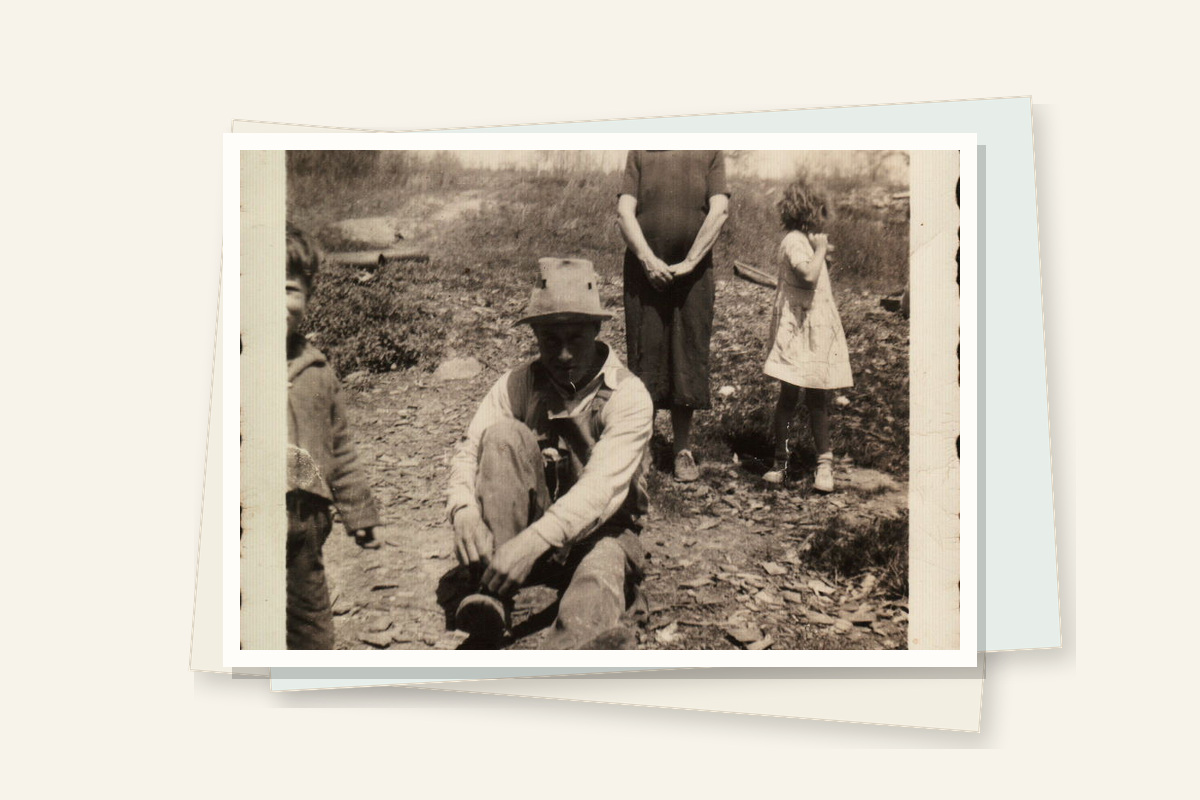
If you've spent much time researching your family tree, you've probably encountered her.
The woman who seems to appear out of nowhere.
You know who she married. You may know the names of her children. You might even know approximately when and where she died. But try to discover who her parents were, and suddenly the trail goes cold.
Female ancestors can be some of the most difficult people in a family tree to identify—particularly women who lived during the 18th and 19th centuries.
One of those women in my own family was Sarah Dickson.
Finding Sarah taught me an important lesson: when a woman seems to disappear from the records, sometimes the answer isn't to search harder for her. It's to start looking at the people and records surrounding her.
What I Knew About Sarah
Sarah Dickson married William S. Murphy in 1858 in Russell County, Alabama.
They had two known children: John Floyd Murphy, born in 1859, and Lavonia Onelia Murphy, born in 1866.
Sarah died in 1866, possibly during or not long after Lavonia's birth. That left a very small window in which Sarah appeared in records as an adult—and very little information pointing backward to the family she came from.
That was the problem.
I could follow William. I could follow their children.
But where did Sarah come from?
Why Female Ancestors Can Be So Difficult to Trace
Sarah's situation isn't unusual.
For much of American history, records were more likely to identify women through their relationships to men than as individuals in their own right.
A woman might be recorded as a daughter in her father's household, then appear under her husband's surname after marriage. In newspapers, deeds, directories, church records, and other sources, she might simply be identified as Mrs. William Murphy rather than Sarah Murphy.
If you don't already know her maiden name, that change can effectively break the paper trail.
There are other complications, too.
Women historically owned property less often than men, appeared less frequently as principal parties in legal and business records, and could die before death certificates became common in their location. Even when records name them, clerks and informants may provide only a first name—or no name at all.
That's why searching for a difficult female ancestor often requires a different approach.
Instead of asking only:
“Where can I find Sarah?”
I began asking:
“Who was connected to Sarah?”
That change in question matters.
Look Beyond Birth, Marriage and Death Records
When we're trying to identify someone's parents, our first instinct is often to search for a birth certificate, marriage record or death certificate.
Those are excellent records—when they exist and contain the information we need.
For Sarah, they weren't enough.
The breakthrough came from a record group that isn't always at the top of a genealogist's search list: guardianship records in Talbot County, Georgia.
Guardianship records can be enormously valuable when researching children whose parents died while they were minors. Depending upon the place and time, the records may identify guardians, deceased parents, siblings, property, inheritances, bondsmen and other people associated with the family.
And those associated people can be just as important as the person you're researching.
Sarah's guardianship records connected her to the Dickson family and provided evidence pointing toward her parents.
Suddenly, Sarah wasn't an isolated woman who appeared in Alabama in 1858.
She had a family network.
And that gave me something I could investigate.
Follow the Family, Not Just the Woman
This is one of the most useful strategies for researching female ancestors.
When you can't find the woman directly, research the people around her.
Look at siblings. Guardians. Witnesses. Neighbors. Bondsmen. People named in probate records. People who migrated from one county to another at about the same time.
Genealogists sometimes refer to this broader approach as cluster research or researching a person's FAN club—Friends, Associates and Neighbors.
The idea is simple: our ancestors didn't live in isolation.
Families migrated together. Relatives witnessed marriages and deeds. Brothers became guardians. Neighbors served as bondsmen. Children were sometimes placed with grandparents, aunts, uncles or other relatives after a parent's death.
The record that identifies your female ancestor's parents may not actually be her record.
It may belong to her brother, her uncle—or the person appointed to look after her when she was young.
Then DNA Added Another Layer of Evidence
Documentary evidence gave me a hypothesis about Sarah's family.
DNA gave me another way to test it.
DNA matches connecting to descendants of the Dickson family provided additional evidence supporting the relationship identified through the records.
That distinction is important.
DNA shouldn't simply be treated as a magic answer that “proves” an ancestor because you find a match with the right surname. A DNA match can have multiple possible relationship paths, and surnames alone aren't enough to establish how two people are related.
Instead, I want the DNA evidence and the documentary evidence to tell a consistent story.
In Sarah's case, they did.
Putting Sarah Back Into Her Family
Taken together, the evidence identified Sarah as the daughter of Thomas Dickson and Salatha (Kinsey) Dickson of Talbot County, Georgia.
That gave me more than another pair of names to add to my family tree.
It explained where Sarah came from.
The young woman who married William Murphy in Alabama in 1858 was no longer someone who simply appeared there without a past. The guardianship records connected her to an earlier family in Georgia, while the DNA evidence provided another independent line of evidence supporting that connection.
That's the difference between collecting names and building evidence.
When You're Stuck on a Female Ancestor
If you have a woman in your tree who seems to appear at marriage and disappear behind her husband's name, don't assume you've reached the end of the trail.
Change the search.
Look for:
- Guardianship and probate records, especially if one or both parents may have died while she was young.
- Marriage bonds, licenses and witnesses, not just the marriage date itself.
- Deeds and estate distributions that may identify married daughters by both their married names and relationships.
- Her children's records, particularly death certificates, marriage records and obituaries that might identify their mother's maiden name.
- Siblings and suspected siblings, whose records may reveal parents more clearly than hers do.
- Friends, associates and neighbors, especially families who repeatedly appear near her before and after marriage.
- DNA matches, used alongside documentary evidence to test possible family connections.
Most importantly, don't limit your search to records created about her.
Sometimes the record that finally identifies a woman is sitting in somebody else's file.
Sarah Wasn't Really Missing
For years, Sarah looked like one of those frustrating women who had simply vanished into history.
She hadn't.
I was looking for her in the kinds of records where I expected her name to appear. Once I widened the search—to guardianship records, family connections and eventually DNA—the evidence began to come together.
That's one of my favorite things about genealogy.
A brick wall doesn't always mean the records aren't there.
Sometimes it means we need to ask a different question.