Identify the Source
Record what you're analyzing, the question you're trying to answer, and whether the source is original, derivative, or still uncertain.
 RESEARCH TOOL
Stop collecting records. Start understanding what the evidence actually supports.
WHAT'S INSIDE
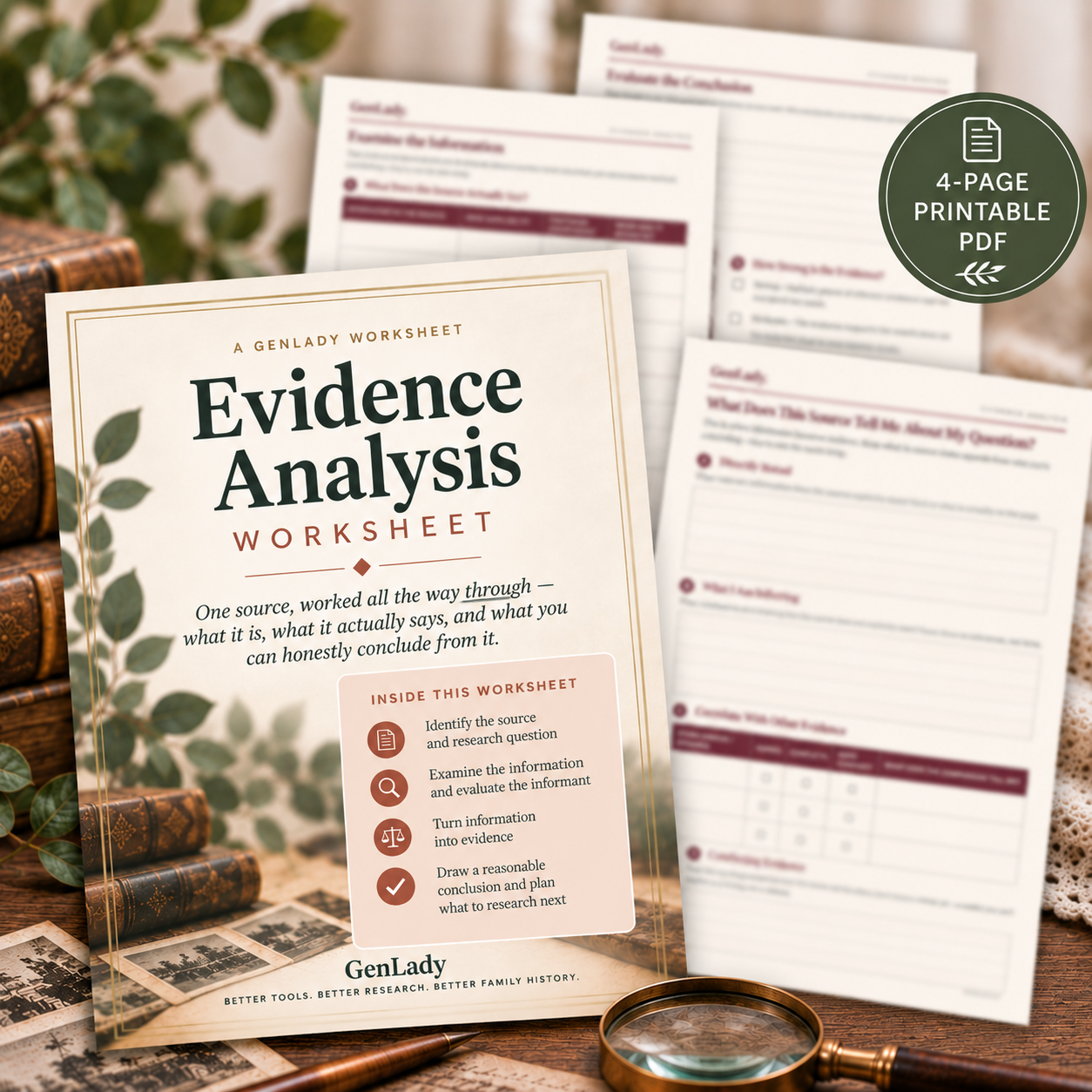
A source doesn't answer a genealogy question simply because you found it. This worksheet helps you examine where the information came from, distinguish what the source actually says from what you're concluding, compare it with other evidence, and decide how strongly the evidence supports your answer.
Record what you're analyzing, the question you're trying to answer, and whether the source is original, derivative, or still uncertain.
Identify who supplied important information, whether they likely had firsthand knowledge, and what might affect its reliability.
Distinguish what the source explicitly states from conclusions you're drawing from that information.
Compare the source with other evidence and identify agreements, conflicts, and information that adds important context.
Decide what the evidence currently supports and whether your conclusion is strong, moderate, tentative, or not supported.
Identify missing evidence, consider what could change your conclusion, and choose the next three searches that matter most.
THE WORKFLOW
Work through one source at a time. The goal isn't to decide whether a record is simply “right” or “wrong,” but to understand what information it contributes and how that information fits with the rest of your evidence.
Don't ask which record is right. Ask which conclusion best explains all of the evidence.