Define the question
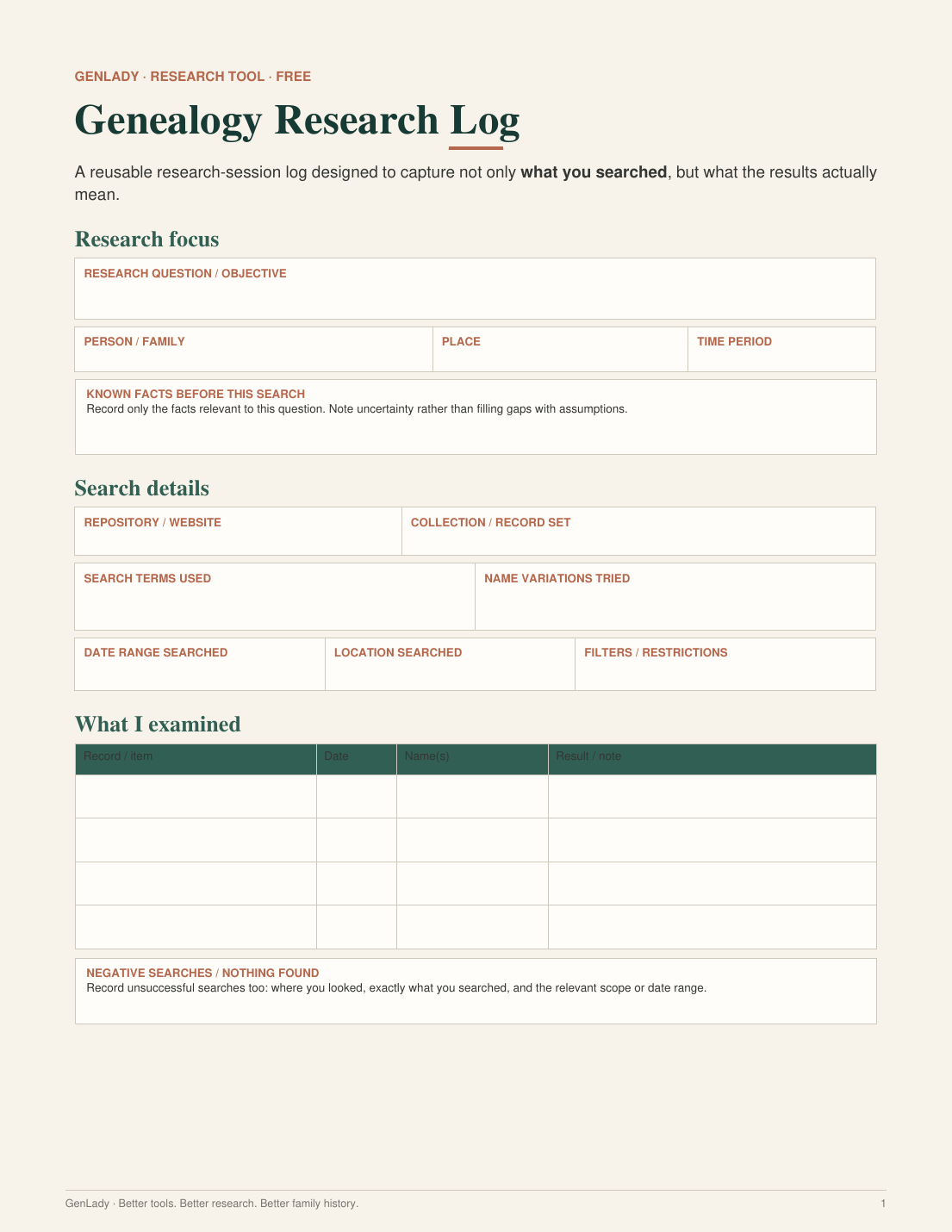
Record the research question or objective, person or family, place, time period and the facts already known.
 FREE · 2 PAGES
RESEARCH TOOL · FREE
Keep track of what you searched, what you found, what the evidence means, and what you need to do next.
WHAT'S INSIDE
Good research is easier to evaluate when you can see the question you were trying to answer, the searches you performed, the records you examined, and the searches that produced nothing.
The second page helps you move beyond collecting information by recording what a source says, what the evidence supports or contradicts, unresolved conflicts, and your next research actions.
Record the research question or objective, person or family, place, time period and the facts already known.
Track repositories, websites, collections, search terms, name variations, dates, locations and filters.
Document records examined and searches that produced no result so you do not unknowingly repeat the same work.
Give yourself a place for the source or citation and a clear summary of what the source actually says or shows.
Note what the evidence supports or contradicts and mark your confidence as Confirmed, Probable, Possible or Unknown.
Record conflicts, new questions, associates and places, unchecked sources, searches to repeat and your next three actions.
TWO PAGES, ONE RESEARCH QUESTION
Use page one to document the search itself. Use page two to think through the evidence and turn what you learned into concrete next steps.
Record the search—not just the find.
THE GENLADY GENEALOGY RESEARCH LOG